Beyond Time-Outs: A Modern Guide to Child Discipline That Builds Character
Discipline isn't about punishment—it's about teaching. Discover practical, evidence-based strategies to guide your child's behavior while strengthening your connection and fostering their emotional growth.
Related Guides
- /blog/toddler-behavior-guide
- /blog/global-toddler-tantrums
- /blog/global-positive-parenting
When you hear the word "discipline," what comes to mind? For many parents, it conjures images of time-outs, lost privileges, or raised voices. But the Latin root of the word, *disciplina*, means "teaching" or "instruction." True discipline isn't about controlling behavior through fear or punishment; it's about guiding children toward understanding, self-regulation, and responsibility.
Modern child development research shows that effective discipline strengthens the parent-child bond while teaching vital life skills. It's less about what you do *to* your child and more about what you teach them *for* themselves. This shift from punishment to teaching can feel challenging, especially in moments of frustration, but it builds a foundation of trust, respect, and emotional intelligence that lasts a lifetime.
What Discipline Really Means: Teaching vs. Punishing
Punishment focuses on the past—what a child did wrong, and what consequence they'll receive for it. Teaching focuses on the future—what a child can learn from the situation, and how they can handle it better next time.
Effective teaching-discipline:
- Connects the consequence directly to the behavior ("Since you threw your toys, they need to be put away for the rest of the afternoon")
- Helps the child understand the impact of their actions ("When you hit your sister, it hurt her body and her feelings")
- Provides an alternative behavior ("Next time you're angry, you can stomp your feet or squeeze this stress ball")
Punishment-driven discipline:
- Often arbitrary ("No screen time for a week because you didn't clean your room")
- Creates fear or resentment without understanding
- Misses the opportunity for learning and repair
The Foundation: Connection Before Correction
Children learn best when they feel safe, seen, and secure. Research consistently shows that a strong emotional connection makes children more receptive to guidance. Before addressing problematic behavior, especially with younger children, take a moment to connect.
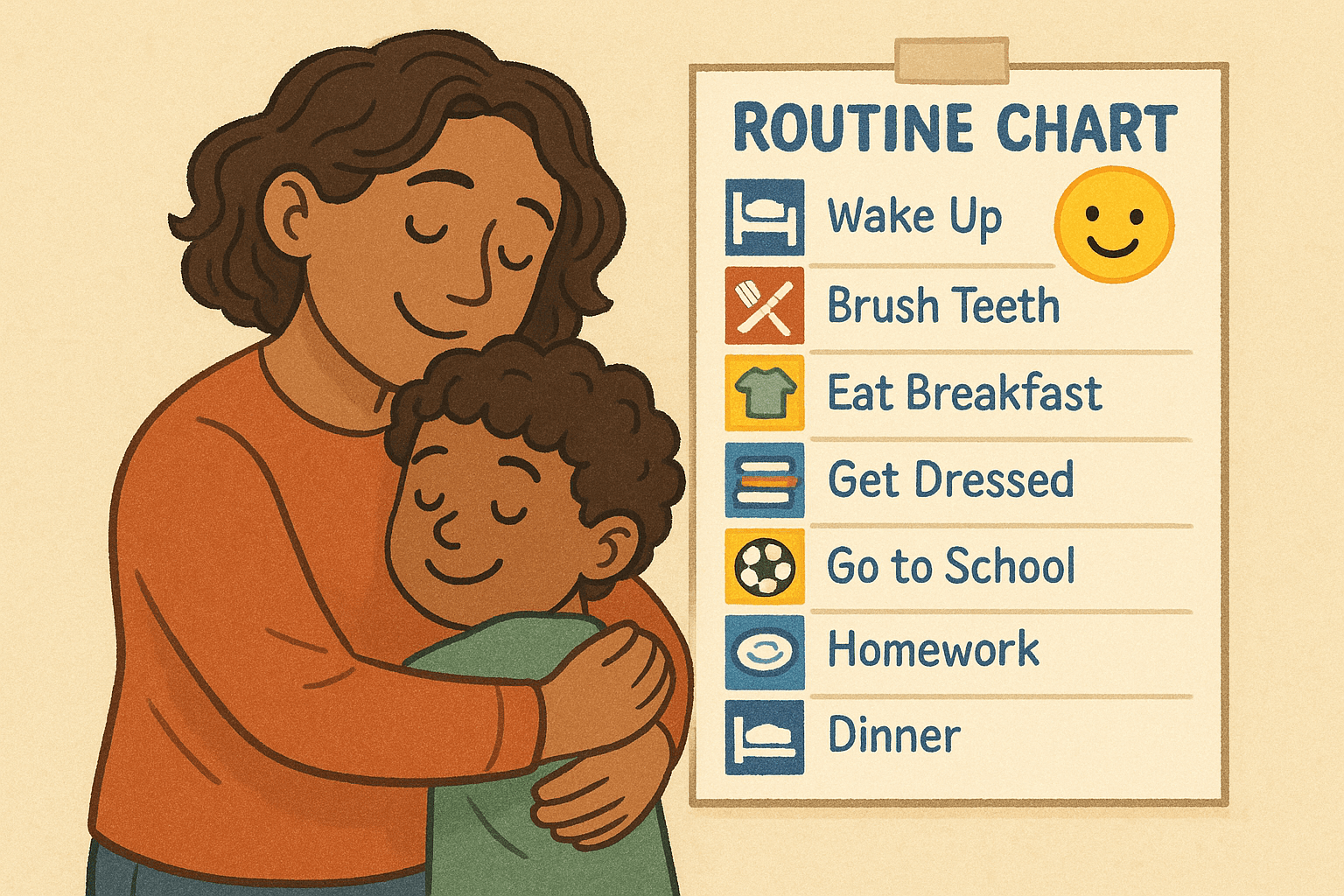
Practical routine: When your child is upset or misbehaving, try the "3 C's":
1. Calm yourself first with a deep breath
2. Connect physically or verbally ("I see you're really upset right now")
3. Correct with teaching ("Let's talk about what happened")
This doesn't mean you ignore the behavior—it means you address it from a place of connection rather than confrontation.
Age-Appropriate Strategies That Actually Work
Toddlers (1-3 years)
What they're learning: Cause and effect, basic boundaries, emotional regulation
- Strategy: Redirection and simple choices
- Example: Instead of "Don't touch that!" try "That's not for touching. Here's your special box of kitchen toys you CAN play with."
- Quick tip: Keep instructions simple (2-3 words) and pair with visual cues
Preschoolers (3-5 years)
What they're learning: Social skills, empathy, problem-solving
- Strategy: Natural consequences and emotion coaching
- Example: If they refuse to wear a coat, let them experience being cold (within safe limits) rather than forcing it
- Quick tip: Use "when-then" statements: "WHEN you put your shoes on, THEN we can go to the park"
School-Age (6-9 years)
What they're learning: Responsibility, logical thinking, fairness
- Strategy: Collaborative problem-solving and logical consequences
- Example: If they forget their lunch, don't rush to deliver it (if safe and appropriate). The natural consequence is being hungry, which helps them remember next time
- Quick tip: Hold family meetings to discuss rules and consequences together
Tweens (10-12 years)
What they're learning: Independence, complex reasoning, ethical thinking
- Strategy: Dialogue and restorative practices
- Example: If they break something, have them help fix or replace it
- Quick tip: Ask open-ended questions: "What do you think would be a fair way to handle this situation?"
What to Avoid: Common Discipline Pitfalls
1. Shaming or labeling: "You're so lazy/clumsy/selfish" becomes a self-fulfilling prophecy
2. Inconsistent follow-through: Empty threats undermine your authority
3. Yelling: Models poor emotional regulation and activates a child's fight-or-flight response
4. Comparing siblings: "Why can't you be more like your sister?" creates resentment
5. Disciplining while angry: Wait until you're calm to address the behavior effectively
6. Overusing rewards: External rewards can diminish intrinsic motivation over time
A Quick Weekly Plan for Consistent, Calm Discipline
Monday: Set 2-3 clear, positive family rules together ("We use gentle hands," "We clean up after ourselves")
Tuesday: Practice proactive teaching—role-play challenging situations before they happen
Wednesday: Implement a "connection ritual"—10 minutes of one-on-one time with each child, no distractions
Thursday: Review and praise effort, not just outcomes ("I noticed how hard you worked on that puzzle")
Friday: Family meeting to discuss what's working and what needs adjustment
Saturday: Model apology and repair when YOU make a mistake
Sunday: Plan for the week ahead—anticipate challenging transitions or situations
When to Seek Additional Support
While challenging behavior is normal, certain patterns may warrant professional consultation:
- Behavior that causes harm to self or others
- Frequent, intense tantrums that last beyond the toddler years
- Difficulty forming peer relationships
- Regression in previously mastered skills (like toilet training)
- Signs of anxiety or depression alongside behavioral challenges
Consult with your pediatrician or a child psychologist if you have concerns. They can help determine if what you're seeing is typical developmental behavior or something that needs specialized support.
FAQ: Your Discipline Questions Answered
Q: My child doesn't seem to care about consequences. What am I doing wrong?
A: First, ensure consequences are logical and immediate, especially for younger children. If a consequence happens hours later or seems unrelated, children may not make the connection. Also, check if you're giving enough positive attention for good behavior—sometimes children prefer negative attention to no attention at all.
Q: How do I discipline when I'm co-parenting with different styles?
A: Focus on finding common ground on core values and safety rules. Agree on 3-5 non-negotiables you'll both enforce consistently. For other areas, accept that different isn't necessarily wrong. Presenting a united front on major issues matters more than identical approaches on every small matter.
Q: Is it okay to apologize to my child when I've overreacted?
A: Absolutely. Modeling genuine apology teaches accountability, repair, and humility. A good apology includes: acknowledging what you did, taking responsibility (without excuses), expressing regret, and stating how you'll do better next time.
Moving Forward: Your Discipline Journey
Discipline is a journey, not a destination. You won't get it right every time—and that's okay. What matters is the overall pattern of connection, teaching, and respect you establish. When you make mistakes (and you will), repair them. When you succeed, notice what worked.
The most powerful disciplinary tool you have isn't a specific technique—it's your relationship with your child. Invest in that connection daily, and the teaching becomes easier, the conflicts become less frequent, and the growth becomes more visible. Start small this week: pick one strategy from this guide, practice it consistently, and observe what changes in your home. Your effort to discipline through teaching rather than punishing is one of the greatest gifts you can give your child—and yourself.
Your next step: This week, choose ONE area where discipline feels particularly challenging. Instead of reacting automatically, pause and ask yourself: "What is my child needing to learn here?" Then approach the situation as a teacher, not a punisher. Notice what shifts.