Helping Your Child Navigate Anger: A Compassionate Guide to Emotional Regulation
Anger in children isn't misbehavior—it's a message. Learn how to decode it with practical, age-specific strategies that build emotional resilience and strengthen your connection.
Watching your child explode with anger—the clenched fists, the red face, the shouts or tears—can leave you feeling helpless, frustrated, or even angry yourself. In that heated moment, it's easy to see the outburst as defiance or a personal challenge to your authority. But what if we shifted our perspective? Childhood anger is not a character flaw or a failure of discipline. It is, first and foremost, a form of communication. It's a signal flare indicating that a child is overwhelmed by an emotion they do not yet have the vocabulary or neurological tools to process. In the Indian context, where emotional expression is often subtly guided by cultural nuances, understanding this signal is the first, most crucial step toward helping our children build a healthy relationship with all their feelings, including anger.
This guide moves beyond simply "managing" outbursts. It focuses on *teaching*—equipping you with evidence-informed strategies to help your child understand, express, and regulate their anger constructively. We'll build a toolkit that respects your child's developmental stage and strengthens your bond, turning moments of conflict into opportunities for growth.
Understanding the "Why": Anger as a Secondary Emotion
Anger is rarely the first emotion. It's often a protective shield for more vulnerable feelings like hurt, embarrassment, fear, frustration, or injustice. A child who lashes out after losing a game might be masking deep disappointment. One who screams when asked to turn off the TV might be feeling a loss of control. When we punish the angry outburst without addressing the root cause, we teach children to suppress, not regulate. The goal is to help them identify the softer feeling beneath the hard shell of anger. A simple script to start this process is, "I see you're really angry. I wonder if you're also feeling upset because your tower fell down?" This validates the emotion while gently guiding them toward self-awareness.
Building Your Calm Foundation: Regulation Starts with You
A child's nervous system is wired to co-regulate with their caregiver's. You cannot pour from an empty cup. When your child is in meltdown, your calm presence is the anchor. This doesn't mean you don't feel frustrated; it means you've practiced managing your own response. What to Avoid: Mirroring their anger by shouting back. This escalates the situation into a power struggle. Try This Instead: Practice the "Pause and Breathe" technique. When you feel your own temperature rising, consciously take three slow, deep breaths before you speak. This models self-regulation and gives your prefrontal cortex—the logical brain—a chance to engage over the reactive amygdala.
Age-Specific Strategies: Meeting Your Child Where They Are
Toddlers (2-4 years): The Language of Feelings
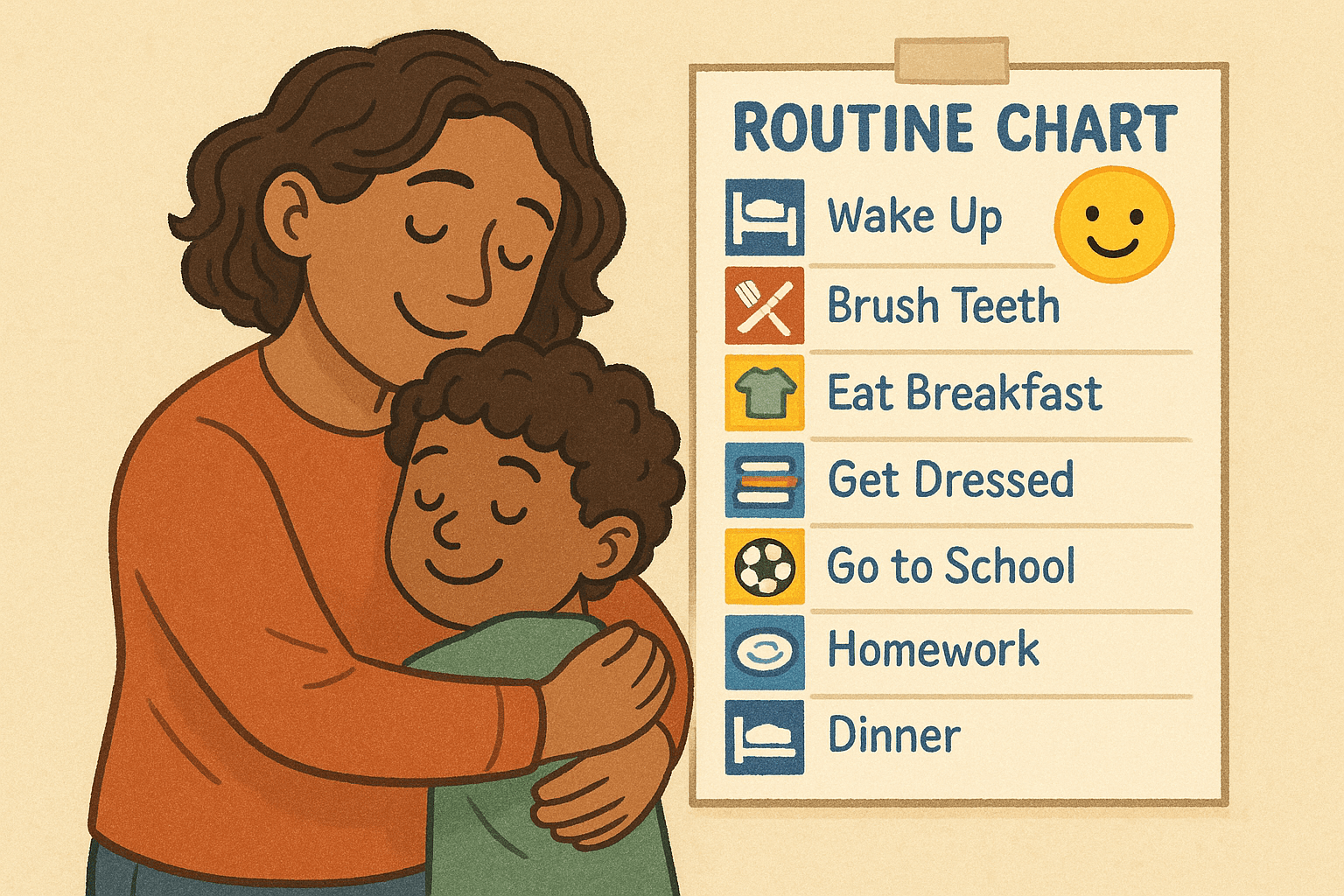
At this stage, anger is often born from big desires trapped in limited communication skills. Routine: Create a "Feeling Faces" chart with simple emojis (happy, sad, angry, frustrated). Point to it when they're upset and name the emotion. Example: "Your face looks like this angry face. Did you get mad when your sister took the toy?" Tool: Offer physical outlets—stomping feet like a dinosaur, squeezing playdough, or tearing old newspapers in a designated "angry box."
Young Children (5-8 years): Building the Toolkit
Children now understand cause and effect but need concrete tools. Routine: Introduce the "Cool-Down Corner"—a safe, cozy space with pillows, books, and sensory toys (stress balls, glitter jars). It's not a timeout; it's a choice to self-regulate. Example: "I can see you're getting frustrated with your homework. Would you like to spend 5 minutes in your cool-down corner?" Tool: Teach the "1-2-3 Breathe" method: Smell a flower (inhale), blow out a candle (exhale), repeat.
Pre-Teens (9-12 years): Problem-Solving Partners
Anger now links to complex social dynamics and a growing sense of justice. Routine: Hold weekly "check-in" chats over a favorite snack. Ask open-ended questions: "What was the most frustrating thing this week?" Example: If they're angry about a friend's comment, avoid dismissing it. Say, "That must have hurt. What would you like to do about it?" Brainstorm solutions together. Tool: Introduce journaling or drawing as a private outlet for intense feelings.
The Communication Bridge: Phrases That De-escalate
Your words can either fan the flames or douse them. Replace commands with connection.
- Instead of: "Stop yelling right now!"
Try: "Your voice is very loud. I'm listening. Can you use your regular voice to tell me what's wrong?"
- Instead of: "Go to your room until you calm down!"
Try: "Let's take a break together. We can sit here quietly for a few minutes."
- Instead of: "You're overreacting!"
Try: "This seems really important to you. Help me understand."
These phrases acknowledge the emotion without condoning aggressive behavior, keeping the communication channel open.
What to Avoid: Common Well-Intentioned Pitfalls
1. Minimizing Feelings: "Don't be silly, it's just a toy." This teaches children their feelings are invalid.
2. Punishing the Emotion: Sending a child away for *feeling* angry makes the emotion scary and shameful.
3. Labelling: Calling a child "angry" or "aggressive" can become a self-fulfilling prophecy.
4. Inconsistent Responses: Sometimes ignoring, sometimes punishing outbursts creates confusion and insecurity.
5. Forcing Apologies: A coerced "sorry" is meaningless. Focus first on understanding the impact of their actions, then a genuine apology can follow.
A Quick Weekly Plan for Building Emotional Skills
Integrate these small practices into your week to build resilience proactively.
- Monday (Mindful Morning): Start the day with 2 minutes of belly breathing together.
- Tuesday (Feeling Check-in): At dinner, have everyone share one feeling from their day using the "Feeling Faces" chart.
- Wednesday (Story Time): Read a book about emotions (e.g., "The Color Monster" for younger kids).
- Thursday (Tool Practice): Practice the "Cool-Down Corner" or glitter jar when everyone is calm.
- Friday (Gratitude & Grievance): Share one thing you're thankful for and one minor annoyance from the week.
- Weekend (Connection & Play): Dedicate 20 minutes of uninterrupted, device-free play. Connection is the ultimate buffer against dysregulation.
When to Seek Additional Support
While anger is a normal emotion, consistent patterns may warrant a conversation with a professional. Consider seeking guidance from a child psychologist or counselor if you notice:
- Anger that frequently leads to aggression harming self, others, or property.
- Outbursts that are extreme for the situation and last for very long periods.
- Anger that significantly interferes with friendships, school, or family life.
- Signs of underlying anxiety, low self-esteem, or sadness alongside the anger.
- Your own feelings of being consistently overwhelmed or unable to cope.
Seeking help is a sign of strength and proactive parenting, not a failure.
FAQ: Your Questions Answered
Q: My child says horrible things when angry, like 'I hate you.' How should I react?
A: In the moment, try not to take it personally—it's an explosion of emotion, not a reasoned statement. Stay calm and set a boundary: "Those words hurt. I know you're very angry right now. Let's take some quiet time, and then we can talk about what you're really feeling." Later, when calm, explain how words can hurt and help them find alternative ways to express intense anger (e.g., "I am SO angry right now!" is more acceptable).
Q: Is it okay for me to show my own anger in front of my child?
A: Yes, when modeled healthily. It's an opportunity to demonstrate regulation. You can say, "I'm feeling very frustrated right now, so I'm going to take five deep breaths/walk to the kitchen for a glass of water before we talk about this." This shows them that adults have big feelings too, and we use tools to handle them.
Q: We've tried everything, and nothing works. What now?
A: First, please be kind to yourself. This is challenging work. Go back to basics: focus solely on your own regulation and connection for a week. Prioritize one-on-one time without corrections or lessons. Sometimes, a flood of negative interactions needs to be balanced with a flood of positive, neutral connection to rebuild safety. If after this intentional focus the challenges persist, it is a clear signal to consult a child development professional for tailored support.
Your Path Forward
Teaching emotional regulation is a marathon, not a sprint. There will be days when you lose your cool and days when your child's anger feels unmanageable. That's normal. Progress is not a straight line. Every time you respond with patience, name a feeling, or model a deep breath, you are laying a brick in the foundation of your child's emotional intelligence. You are giving them a gift far greater than momentary compliance: the lifelong ability to understand their inner world, navigate conflicts, and build healthy relationships. Start small this week. Pick just one strategy—perhaps the "Pause and Breathe" for yourself or creating a "Cool-Down Corner." Your calm, consistent presence is the most powerful tool you have.