Beyond ABCs and 123s: Nurturing Your Preschooler's True Potential
Preschool learning is less about worksheets and more about building the foundation for a curious, resilient, and kind human being. This guide helps you navigate these precious years with practical, evidence-informed strategies.

As parents, we often feel a quiet pressure as our children approach preschool age. Visions of alphabet charts and number flashcards can loom large, mixed with worries about "keeping up." But what if the most crucial preschool learning isn't found on a worksheet? Neuroscience and child development research consistently tell us that the preschool years (roughly 3-5 years) are primarily for building the *foundation*—the cognitive, social, emotional, and physical framework upon which all future academic learning will rest. This is a time for wiring the brain for curiosity, resilience, and connection. Let's shift our focus from mere content to cultivating the core capacities that will help your child thrive, in school and in life.
What Preschool Learning Really Means
Preschool learning is holistic development. It's the process through which children make sense of their world through play, exploration, and relationships. Think of it as developing the *software* (cognitive skills like problem-solving) and the *hardware* (fine motor skills for writing) simultaneously. Key developmental domains include:
- Social-Emotional: Sharing, recognizing feelings, managing frustration.
- Language & Literacy: Building vocabulary, understanding stories, scribbling/drawing.
- Cognitive: Sorting objects, understanding cause-and-effect, simple puzzle-solving.
- Physical: Running, jumping, stacking blocks, using a crayon.
True readiness for formal schooling stems from strength across all these areas.
The Power of Purposeful Play: Your First Step
What should parents do first? Start by valuing play as the primary engine of learning. Before buying any curriculum, observe your child at play. Are they lining up cars? That's sorting and sequencing. Are they pretending to run a shop? That's narrative thinking and social negotiation. Your first step is to become a keen observer and occasional play partner. Get down on the floor, follow their lead, and occasionally enrich the play with questions ("What will happen if we add this block?") or new vocabulary ("That's not just a big tower, it's a *skyscraper*!").
Age-Banded Guide: What to Nurture When
**Ages 3-4 Years:**
- Focus: Independence, language explosion, cooperative play.
- Try: Simple chores (setting napkins), naming emotions ("You look disappointed"), playing matching games, lots of sand/water play for sensory development.
- Language: Read rhyming books, sing songs, and engage in back-and-forth conversations.
**Ages 4-5 Years:**
- Focus: Problem-solving, complex pretend play, early numeracy & literacy concepts.
- Try: Board games with simple rules (snakes & ladders), scavenger hunts, cooking together (measuring, pouring), encouraging writing in all forms (grocery lists, birthday cards).
- Concepts: Introduce "more/less," count objects in daily life, point out letters in their name on signs.
Building a Learning-Rich Home Environment
You don't need a classroom. Create simple activity zones:
1. A Reading Nook: A well-lit corner with a small mat and a basket of age-appropriate books.
2. A Creation Station: A low table with supplies like crayons, child-safe scissors, clay, and recycled materials.
3. A Pretend Play Area: A box with props—old clothes, utensils, dolls, toy vehicles.
Rotate toys and books weekly to maintain novelty and interest.
How Can Families Stay Consistent at Home?
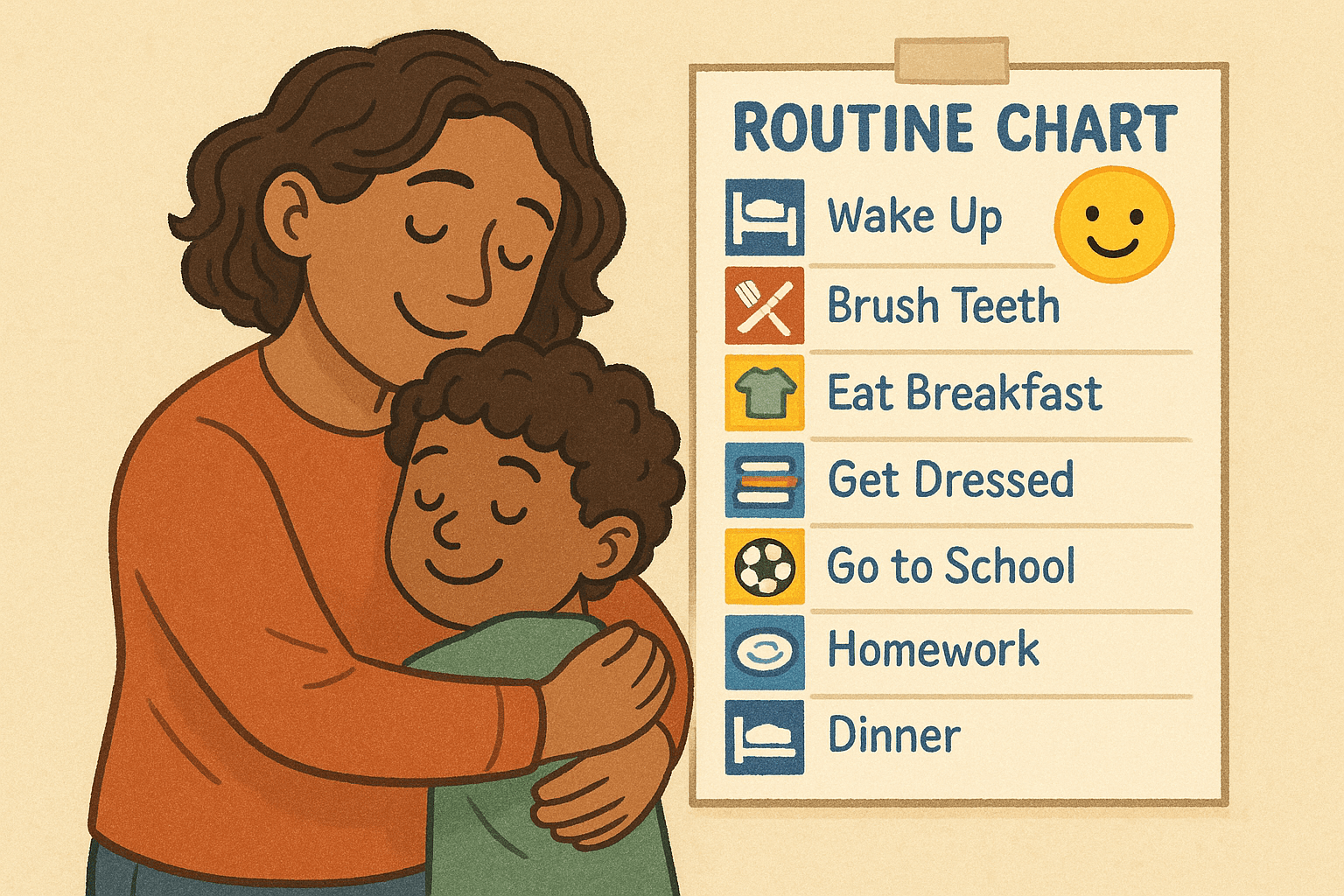
Consistency isn't about rigid schedules; it's about predictable rhythms. Anchor learning to daily routines:
- Mealtime Math: "We need three spoons. One for Papa, one for you, one for me."
- Bedtime Literacy: A fixed routine of 1-2 stories every night.
- Garden Science: Watering plants and observing their growth weekly.
- Weekly Market Visit: Identify colors, shapes, and numbers on price tags.
When learning is woven into life, it requires no extra "time."
What to Avoid: Common Well-Intentioned Missteps
- Avoid: Drilling flashcards in isolation. It's ineffective and can reduce motivation.
- Avoid: Correcting every "mistake," especially in speech or drawing. Focus on the effort and idea.
- Avoid: Comparing your child's progress to others. Developmental ranges are vast.
- Avoid: Over-scheduling with structured classes. Unstructured, free play is non-negotiable.
- Avoid: Using screen time as a primary learning tool. Hands-on, multi-sensory experiences are irreplaceable.
A Quick, Balanced Weekly Plan (Sample)
- Monday (Motor Skills): Threading beads/pasta on a string. Playdough manipulation.
- Tuesday (Language): Visit the library. Read a new book. Act out a favorite story.
- Wednesday (Sensory & Science): Sink/float experiment in a tub. Texture walk in the park.
- Thursday (Math & Logic): Sort laundry by color. Count stairs while climbing.
- Friday (Art & Creativity): Free drawing/painting. Music and dance session.
- Weekend (Social & Family): Playdate or visit to a relative. Simple board game together.
When to Seek Guidance
If you have persistent concerns about your child's development—for instance, significant difficulty with social interaction, extreme frustration with communication, or major delays in motor milestones compared to peers—trust your instincts. Share your observations calmly with your pediatrician or a child development specialist. Early supportive intervention, when needed, is powerful. Avoid Dr. Google for diagnosis.
FAQ: Your Pressing Questions Answered
Q: My child's preschool doesn't give homework or show worksheets. Is that okay?
A: Absolutely. High-quality preschools focus on play-based, activity-oriented learning. The skills built through well-facilitated play—sharing, problem-solving, listening—are more predictive of long-term success than the ability to fill out a worksheet at this age.
Q: How much should I focus on writing the alphabet correctly?
A: At 3-4, focus on strengthening the hand muscles (through playdough, beading, scribbling) and recognizing letters in their name and environment. By 4-5, encourage *representational* writing (making a list, signing a card) without pressure for perfection. Correct pencil grip and letter formation will follow when fine motor skills are ready.
Q: My child seems less "advanced" than their cousin. Should I be worried?
A: Children develop at their own unique pace, with spurts in different areas. A temporary lag in one domain (e.g., speech) often coexists with a strength in another (e.g., physical coordination). Focus on your child's individual journey. Consistent, loving engagement is the best catalyst for growth.
Your Path Forward
The goal of preschool learning is not to create a mini scholar, but to nurture a confident, curious, and capable child who loves to learn. Your role is not to be a formal teacher, but a responsive guide who provides rich experiences, language, and unconditional support. Observe, play, read, talk, and explore the world together. The foundation you build now through connection and joyful discovery is the strongest one possible. Start today by simply asking your child, "What should we play?" and following their lead.